

Published August 15, 2018
Blaine home for sale is marvelous! #SOLD!

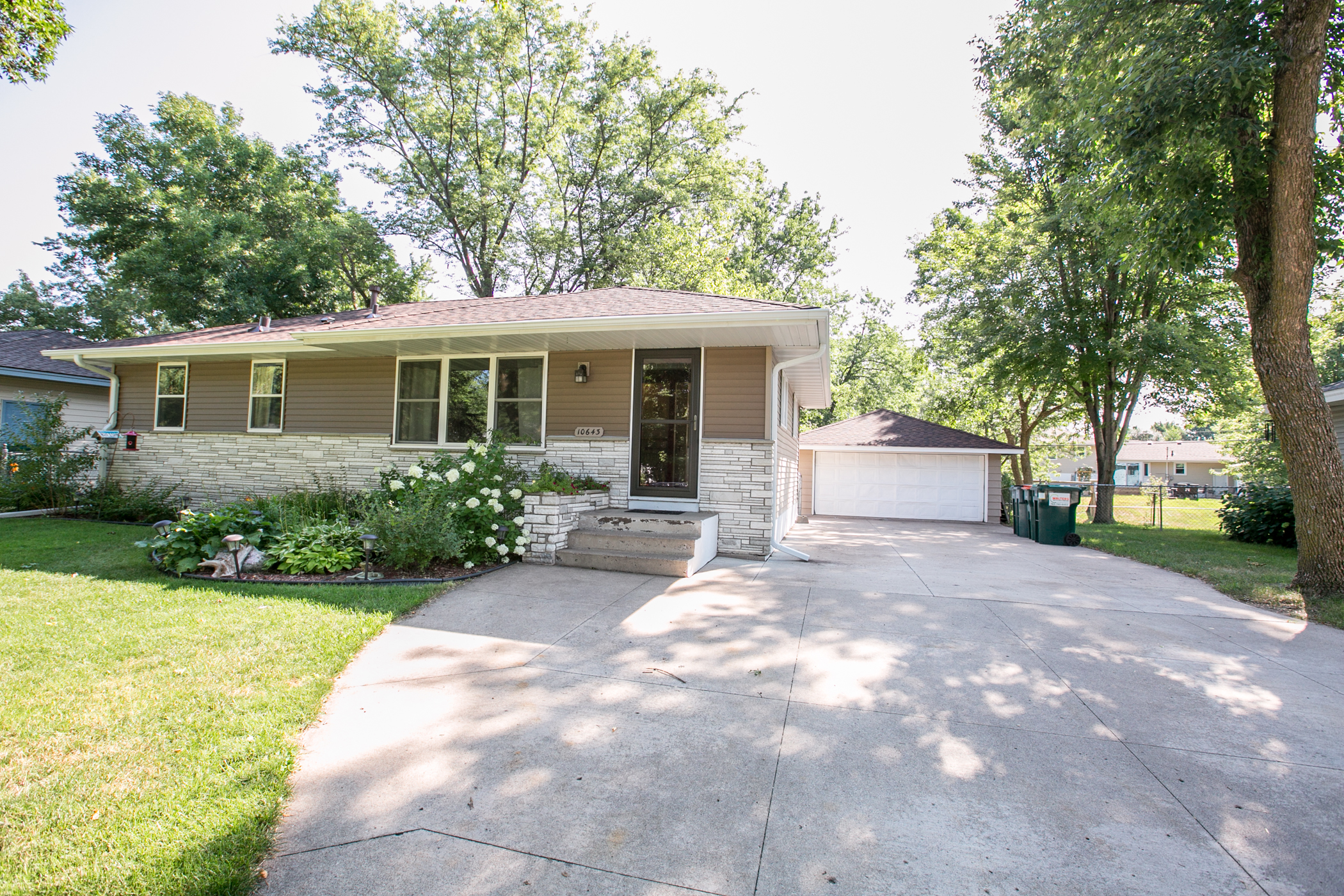
Marvelous 4 bedroom, 2 1/2 bath home located in Blaine! This home features a beautifully updated kitchen with quartz countertops, stainless steel appliances, and updated white cabinets. The spacious main floor addition currently used as a family room includes vaulted ceilings and a gas fireplace. Hardwood floors throughout the main floor leading into magnificent tile in the kitchen! You'll have plenty of room for storage with the 2 car detached garage and the 10X12 storage shed out back! Chris Fritch Team Keller Williams Classic Realty 763-746-3997
Blaine's History
1800s
Until 1877, Blaine was considered to be part of the City of Anoka, Minnesota.
Phillip Laddy, a native of Ireland, is recognized as the first settler in
Blaine. He settled near the lake that now bears his name, Laddie Lake, in 1862.
Laddy died shortly after his arrival and his survivors moved on to Minneapolis.
He was followed by Englishman George Townsend, who lived for a short time in
the area of Lever Street and 103rd Avenue.
It was not until 1865, that Blaine's first permanent resident, Green Chambers, settled
on the old Townsend claim. Chambers was a former slave who moved north from
Barron County, Kentucky, following the Civil War. In 1870, George Wall, Joseph
Gagner, and some others settled in the area and it began to grow.
In 1877, Blaine separated from Anoka and organized as a Township of its own.
That year, the first election was held and Moses Ripley was elected as the
first Chairman of the Board of Supervisors. Ripley, who had come to Minnesota
from Maine, persuaded his fellow Board Members to name the new Township in
honor of James G. Blaine, a senator and three-time presidential candidate from
Maine. By the year 1880, Blaine's population had reached 128.
1900s
While many of the other communities in Anoka County experienced growth due to
farming, Blaine's sandy soils and abundant wetlands discouraged would-be
farmers, and it remained a prime hunting area. Blaine's growth remained slow
until after World War II when starter home developments began to spring up in
the southern part of town.
Blaine's population went from 1,694 in 1950 to 20,640 in 1970. As the
Minneapolis/St. Paul area began to enjoy rapid growth, Blaine's wide-open
spaces became attractive to many people looking for the suburban life style
just a short distance from both downtown Minneapolis and St. Paul.
With the development of Interstate 35-W, State Highway 65, and State Highway
10, Blaine's accessibility to the Twin Cities was greatly improved. Because of
this, Blaine has become a very attractive location for business and residential
development.
Each spring, the Metropolitan Council releases population estimates from the
preceding year and has estimated Blaine's 2013 population at 62,018 people.
Blaine has attracted many new corporate residents, such as the AvedaCorporation and Dayton Rogers Manufacturing. Blaine is also home to the
National Sports Center, an Olympic class training facility, as well as home to
a Tournament Players Club golf course.


or another way